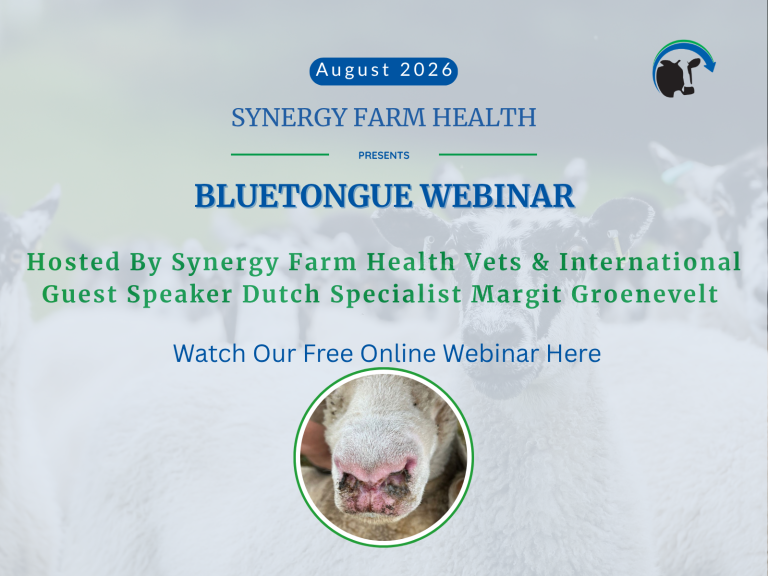
The threat of Bluetongue virus, which has come hot on the heels of Schmallenberg, and other ‘exotic’ viral diseases (foot and mouth disease for example) that can affect our farmed livestock is prominent in everyone’s thoughts at the moment. Bluetongue (and foot and mouth disease) are both notifiable; suspicion of disease (or even if it cannot be ruled out) must be reported to APHA, which will dictate what actions need to be taken.
Schmallenberg virus has already made its presence felt, and the full incursion of Bluetongue into our part of the west country seems inevitable in time. It perplexes me that so much time is spent worrying about these diseases when there is relatively little that can be done to stop them. Biosecurity is important but both are transmitted by midges which are blown about by the wind, there are no vaccines currently available to protect against Schmallenberg and only emergency vaccines available to protect against Bluetongue.
Why, instead, do we not spend more time worrying about the diseases that are endemic within our farmed livestock and significantly constraining productivity, efficiency and welfare??
We have all heard of BVD, IBR, Leptospirosis, Johne’s disease, Neospora – the list goes on. Many of us will have protocols for investigating herd/flock status and mitigating the consequences of infection with these and other agents. But how often are these actually complied with?
You may vaccinate your herd against BVD, which causes infertility, abortions and immunosuppression and ‘tag-and-test’ your calves (all of them? – including the stillborn and aborted ones which are most likely to be PIs?) but do we keep bulk milk surveillance and youngstock check testing up to date?? This is likely to become a statutory requirement during the summer of 2027 and the blood samples necessary to carry out a youngstock check test can easily be collected during a TB test.
Neospora is currently the most commonly diagnosed cause of bovine abortion in the UK. Farmers commonly blame spread in dog faeces but the more common route of transmission within our herds is from dam to calf during pregnancy. Ensuring herd replacements are not bred from known infected cows is an important part of the control of this disease, but do we always examine aborted and stillborn calves postmortem and collect samples for testing?
IBR and Johne’s disease can both compromise productivity. Published work shows a yield reduction of 1l/ day in animals that seroconvert to IBR virus, even in the absence of clinical signs of disease. Johne’s disease will increasingly compromise fertility, production and cull cow value as it progresses.
Even when investigations are undertaken but no significant pathogen is identified, rather than interpreting this as ‘another waste of time and money’ how useful and reassuring is it to know that agents of interest are absent from you herd or flock? What value can you place on peace of mind?
Written by Keith Cutler, BSc BVSc DipECBHM MRCVS RCVS Recognised Specialist in Cattle Health and Production